

|
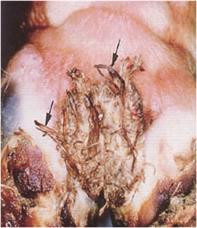
Papillomatous Digital Dermatitis (PDD) was first recognized in the US in 1980. It is an infectious-claw disease in cattle caused by a bacteria. Specific etiology is unknown but spirochetes have been consistently isolated from the lesions, tentatively identified as Treponema spp. Affected cows will develop sore eczema on the skin (canopy edge) related to clover. Eczema is painful and can cause lameness of different degrees. It lowers reproductive efficiency and reduces milk production. Problems with digital dermatitis occurs mainly in groups where poor hygiene in manure paths may exist or with introduction of infected animals into the herd. The appearance and location of the lesion as well as its transmission to other cattle differentiate it from foot rot. Papillomatous digital dermatitis (PDD) and digital dermatitis (DD) are generally considered as different stages of the same disease process. PDD is the more chronic form with the development of papilloma-like structures usually on the plantar surface of the hind foot just proximal to the heel bulbs. It is characterized by epidermal proliferation that after several weeks produces the “hairy warts” or Papillomatous lesions. |
|
What is PDD? |